Reading the skybefore every flight
How we forecast, pick the zone, and verify conditions on-site
Weather decides everything in paragliding
Paragliding is a wind-powered sport. Whether we fly, where we fly, and when we launch is never down to a calendar. It's down to the sky. Every flight day starts with a forecast and ends with a final visual check at launch.
Lanzarote is one of the most reliable flying islands in Europe because it sits in the trade-wind belt: clean, steady ocean breezes most of the year. But reliable is not automatic. The exact wind direction shifts day by day, and that direction is what decides which of our flying zones works.
Step 1: The Forecast
We start the day on Windy.com and Windfinder as our primary public forecasting tools, cross-checked against AEMET (the Spanish state meteorological agency) and the local marine forecast for the Canary Islands.
We're not just looking at "what's the wind today." We read four layers:
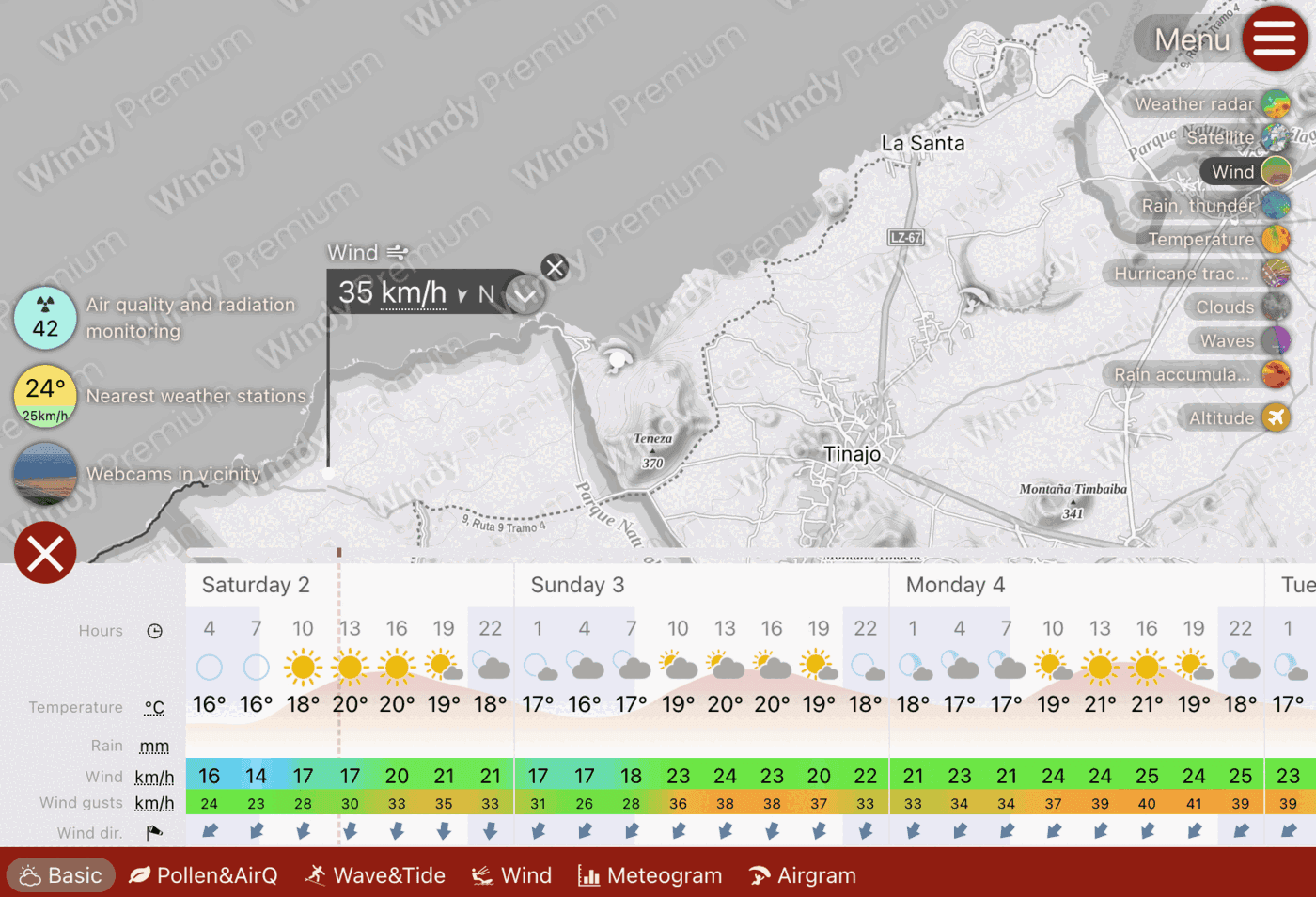
Wind direction at the surface
Which compass bearing the wind is coming from. This single number tells us which flying zone is in play.
Wind speed and gusts
Tandem paragliders work in a relatively narrow window. Too calm and we can't launch; too strong and we won't.
Wind at altitude (1500–3000 m)
The upper-level flow tells us what the air will do once we're up. Big differences between surface and altitude often mean turbulence.
Cloud base and thermal activity
For thermalling flights we need to know how high the lift goes and where the inversion sits.
Our own real-time wind dashboard
Forecasts are great. Real-time data is better. We built wind.lanzaroteparagliding.com, our own dashboard that pulls live wind speed, direction and gusts from the public weather-station network across Lanzarote, and we run our own short-term wind forecast on top of those readings, alongside Windy.com and Windfinder.
Why bother? Public weather models are coarse, too coarse for an island this size. The wind at Tenesar at 9 a.m. is often very different from the wind at Mala at the same moment. With live point-readings from stations spread across the island, we see the conditions you'd feel right now if you walked up to the takeoff.
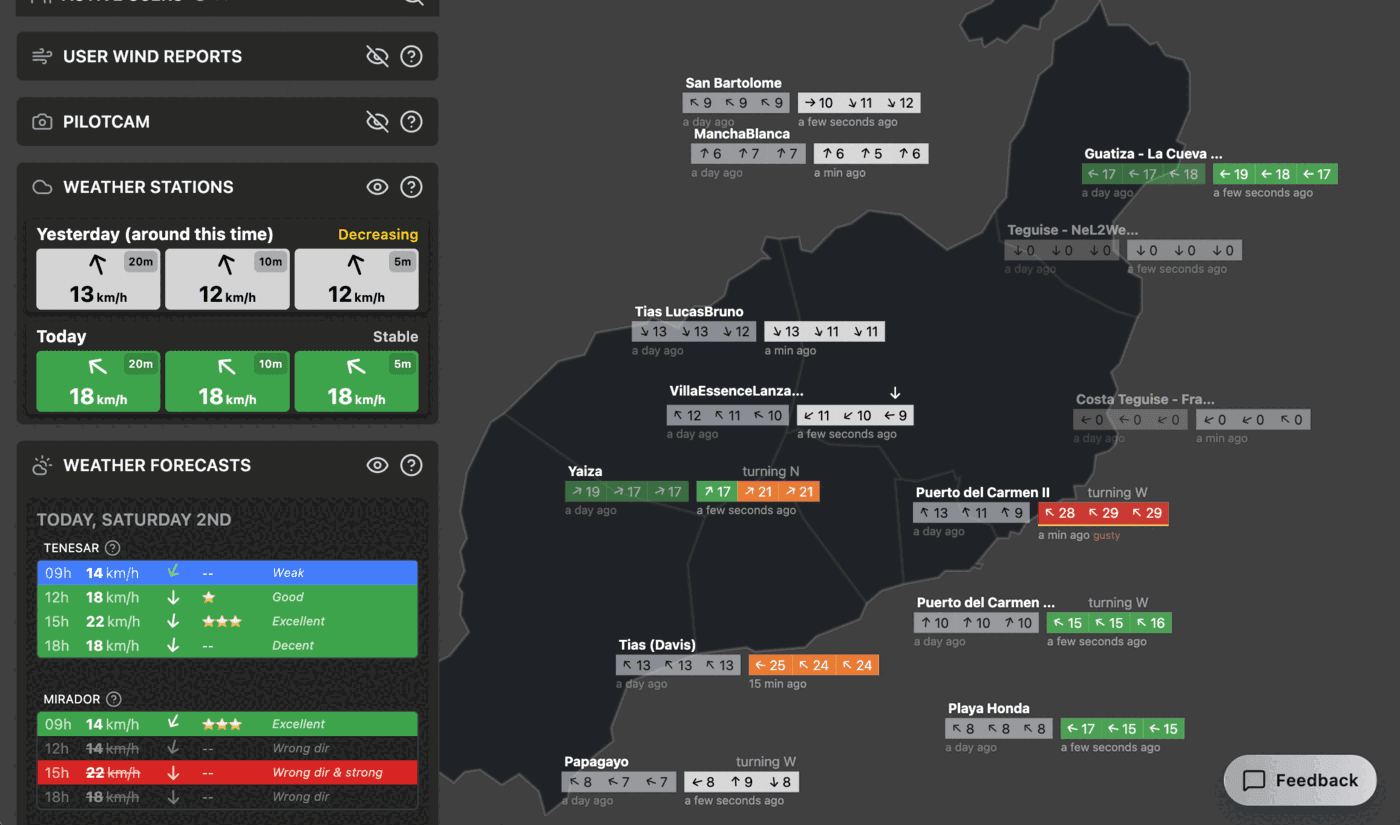
Our live wind dashboard at wind.lanzaroteparagliding.com showing real-time data from stations across the island.
Step 2: Picking the Flying Site
Lanzarote isn't a single launch. It's a network of flying zones spread across the coast and interior. Each zone works with a specific wind direction.
Tenesar
NorthCoastal ridge soaring over volcanic cliffs in the trade winds, with the Atlantic right beneath you.
Mala
Northeast to EastClassic winter site by the dam, plain landings and reliable conditions from October to March.
Macher
South to SoutheastThermal flying with coastal views, our southerly option when the trades back round.
Famara
Variable / lightGentle training area for ground handling and beginner-friendly conditions.
Once the forecast is in, we match wind direction to the zone. If the forecast doesn't fit any of our usable zones, we reschedule. No flight is ever forced.
See all our flying zonesStep 3: On-Site Verification
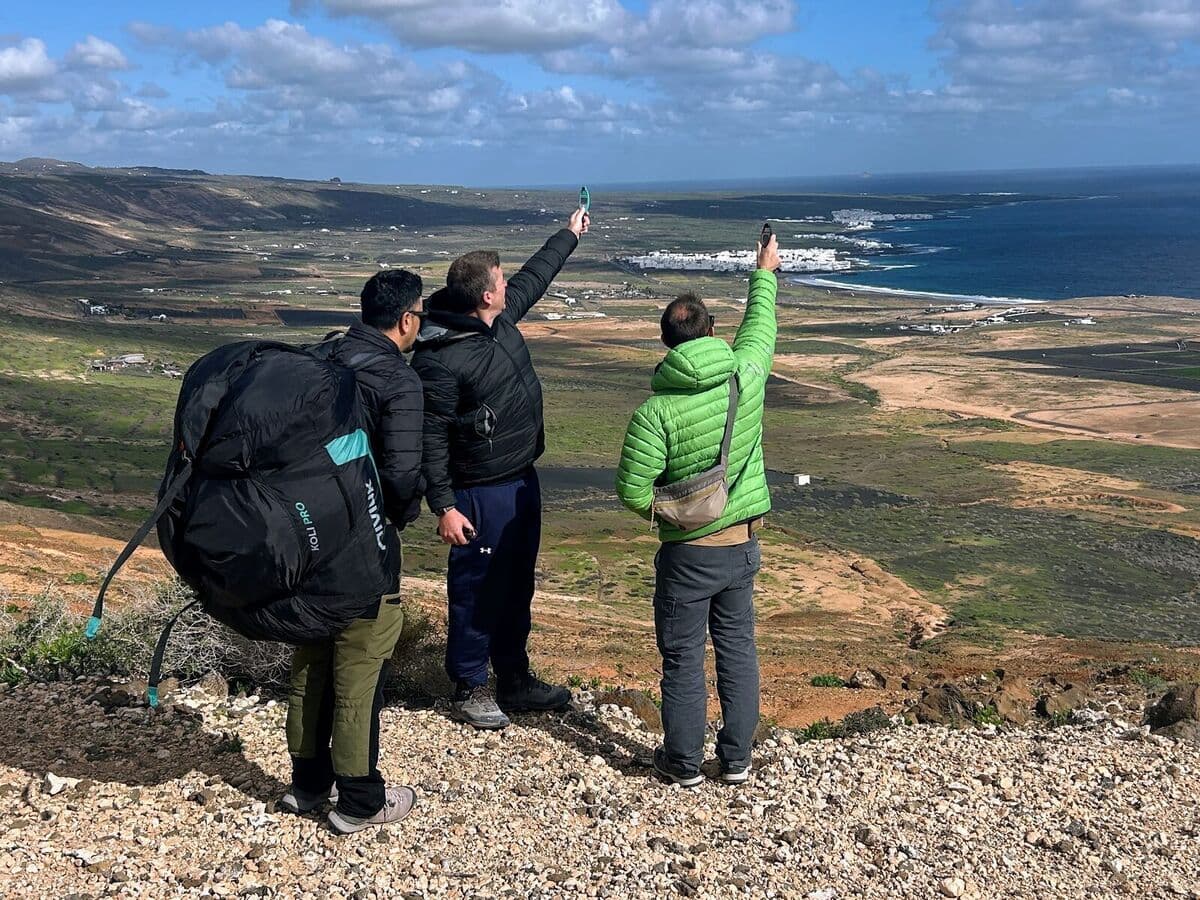
A forecast is a model. The launch is reality. Before we commit to a flight we read the wind on the ground, with eyes and instruments:
Windsocks and ribbons
Direction and intensity at launch height.
Sea surface and whitecaps
Wind speed offshore, visible miles away on a clear day.
Dust, kites, smoke
Tell-tale signs of micro-turbulence over the terrain.
Other pilots already flying
The best real-time signal we have. If the air is working, we see it.
The pilot in command makes the final go/no-go call at launch. Forecasts shift, and a perfect-on-paper morning sometimes turns into a no-fly afternoon. We'd rather reschedule a flight than commit to one we're not 100% comfortable with.
What happens if conditions don't cooperate?
If we cancel for weather, we reschedule for free. Same flight, different day. No penalty, no rebooking fee. Most weather cancellations are a matter of hours: wait out the front, fly the same evening or the next morning.
If you're on the island for a short window and we can't fit a flight in before you leave, we issue a full refund. You don't pay for a flight you didn't take.
We watch the wind. You enjoy the flight.
Book your tandem flight. We handle the forecast, the zone, and the timing.